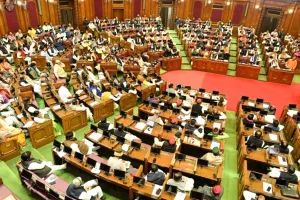
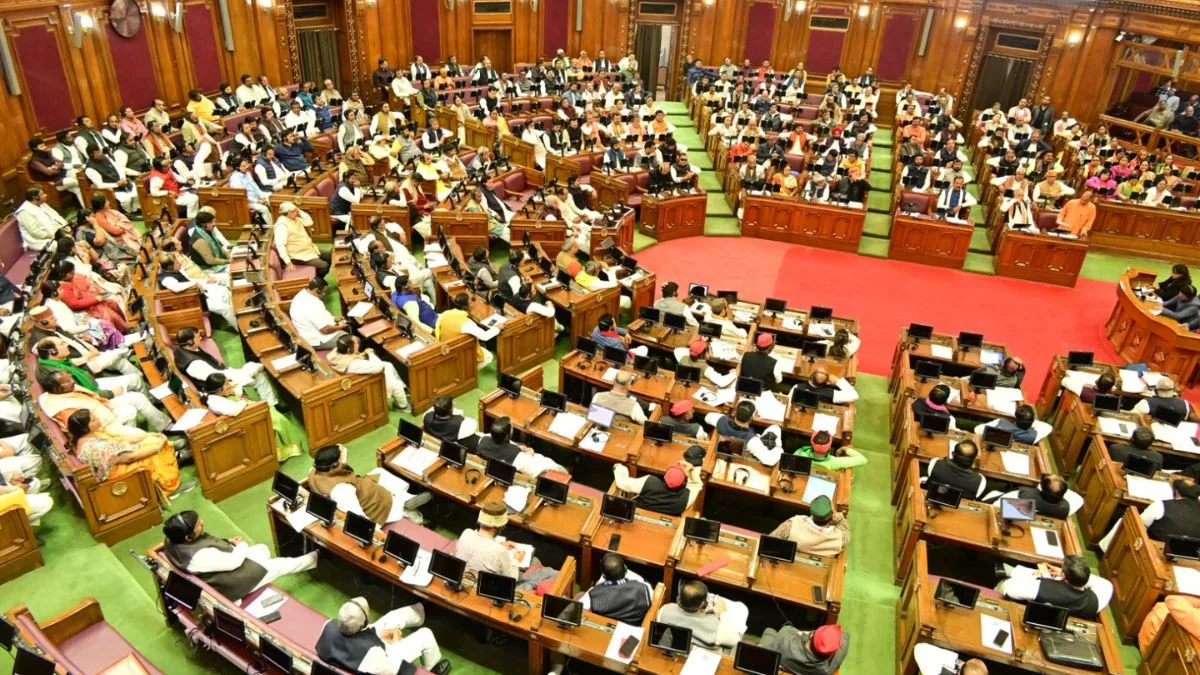
Assam Assembly passes UCC Bill, CM Sarma calls it ‘most secular, uniform and progressive law’
With the passage of the proposed legislation, Assam has now emerged as the third state, after Uttarakhand and Gujarat, to pass a Uniform Civil Code Bill.
Assam is waiting for the counting of votes as key constituencies across the state prepare to decide the final result. Important seats in different regions will play a big role in shaping which party forms the next government.





File Photo
Assam is standing at a political turning point. On May 4, counting of votes across all 126 assembly constituencies will decide who will rule the state next. The big question is simple but powerful: will the Bharatiya Janata Party (BJP) continue its rule for a third straight term, or will the Congress manage a comeback in a state where it once held strong control?
Election battle has been intense. The BJP is leading its campaign under Chief Minister Himanta Biswa Sarma, while the Congress has placed its hopes on Gaurav Gogoi, son of former Chief Minister Tarun Gogoi.
Advertisement
Voting took place in a single phase on April 9. Now all eyes are on the results.
Advertisement
Assam’s 126 constituencies are not politically identical. The state is divided into four major regions, and each region votes differently based on local identity, economy, community concerns.
These regions include:
– Brahmaputra Valley
– Barak Valley
– Hill districts
– Bodoland Territorial Region
Key constituencies across Assam’s political landscape
Several constituencies are drawing close attention because of their political history, powerful candidates, or changing voter patterns.
Jalukbari is one of the most politically significant constituencies in Assam. It includes both urban and rural voters under the Gauhati Lok Sabha seat. Chief Minister Himanta Biswa Sarma has represented it for five terms and won by a record margin of over one lakh votes in 2021. He is widely expected to contest and aim for a sixth consecutive victory.
Jorhat is a major urban constituency in Upper Assam and is expected to see a close fight. Congress leader Gaurav Gogoi is contesting from here. The seat has previously been held by veteran politician Hitendra Nath Goswami for five terms, including periods with AGP and BJP. The political competition here is seen as one of the most symbolic battles in the state.
Silchar, in the Barak Valley, is one of the most watched seats. It was once a Congress stronghold under the late Santosh Mohan Dev. His family, including his wife Bithika Dev and daughter Sushmita Dev (now a Trinamool Congress MP), has been linked to the seat. However, the BJP has maintained control since 2016, especially among Bengali Hindu voters.
Barpeta, earlier known for its minority-dominated voter base, saw demographic changes after delimitation. It is currently represented by Congress’ Abdur Rahim Ahmed. However, for the upcoming election, Congress has fielded Mahananda Sarkar.
Nazira has long been associated with the family of former Chief Minister Hiteswar Saikia. It was represented by him and later by his wife Hemoprava Saikia, who also served as a minister. Currently, their son Debabrata Saikia, the Leader of Opposition in the state assembly, holds the seat. He is aiming for a fourth straight win.
Dispur, which covers parts of Guwahati city and surrounding areas, is considered a prestigious seat. BJP leader Atul Bora has held it since 2016, and earlier represented it as an AGP member from 1985 to 1996. The Congress has fielded Mira Borthakur, who had also contested the 2024 Lok Sabha elections and was earlier with the BJP before shifting during the CAA protests.
Golaghat has a strong tea garden presence and is currently represented by Ajanta Neog, Assam’s first woman finance minister. She is one of the longest-serving women legislators in the state, winning five consecutive terms since 2001. She shifted from Congress to BJP in 2020 and retained the seat in 2021.
Samaguri is a Congress stronghold linked to MP Rakibul Hussain, who held it for five terms before moving to Parliament. In the by-election, BJP’s Diplu Ranjan Sarma defeated his son Tanzil Hussain. The Congress has again fielded Tanzil, making it a direct family-linked political contest.
Duliajan is known for its tea gardens and oil and natural gas industries. It was previously represented by BJP’s Terash Gowala, who served two terms before moving to the Rajya Sabha. Earlier, Rameswar Teli also held the seat and later became a Union minister. The seat remains politically important for the BJP.
Panery is a stronghold of the Bodo community. It has been represented by Assembly Speaker Biswajit Daimary, who has won from both the Bodoland Peoples’ Front (BPF) and BJP. The constituency reflects shifting alliances in the Bodoland region.
Kokrajhar is a newly restructured constituency after the 2023 delimitation. It is expected to see a tight contest between the Bodoland Peoples’ Front and the United Peoples’ Party Liberal (UPPL), both of which are NDA allies. The seat is politically sensitive and closely watched.
Barchalla, located on the northern bank of the Brahmaputra, has been held by BJP’s Ganesh Kumar Limbu for two terms since 2016. The Congress has fielded senior leader Ripun Bora, a former Rajya Sabha MP and ex-state party president, making it a high-profile contest.
Advertisement